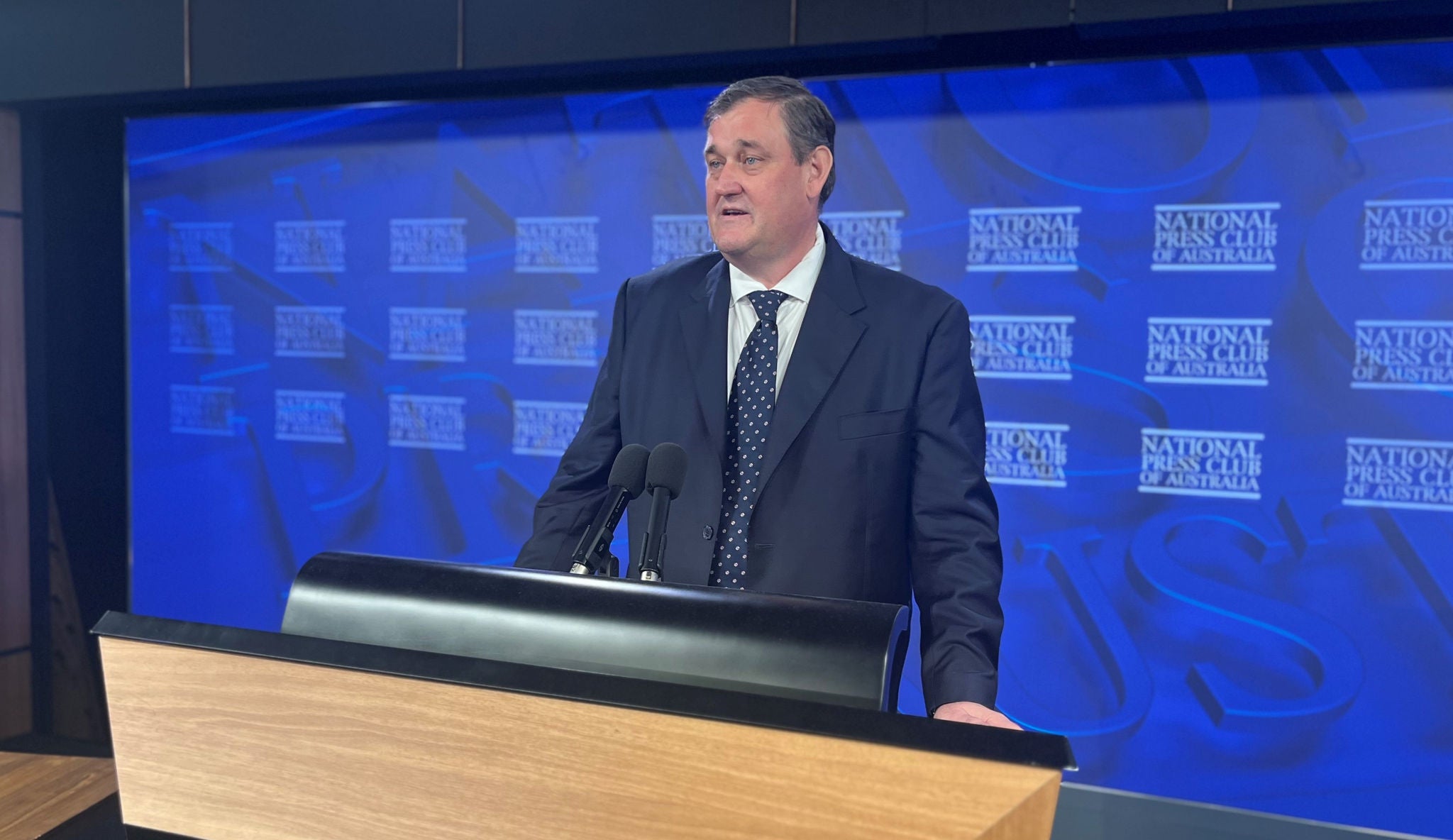



Good afternoon everyone, and thank you to the National Press Club for hosting today’s address. It’s an absolute honour.
I would like to begin by acknowledging the Traditional Owners of the land in which we meet, and pay my respects to Elders past and present.
I grew up on Evans Street in Port Melbourne, Victoria.
My late mum, Wilma, and my five siblings and I lived in a worker’s cottage… and then moved into a small housing commission flat a few doors down the street.
My mum - who raised us from when I was three on her own - worked in a pub on the same street.
I went to visit Evans Street last year.
The pub was still there… although it’s changed its name and it’s had a pretty substantial refurb since last time I peeked in.
I couldn’t help but reminisce about my first job selling newspapers outside the pub – my first taste of entrepreneurialism.
I did deals and upsold newspapers with jars of pickled mussels that I’d scraped off the pier at Port Melbourne earlier that day.
I have great memories of my childhood.
My mum - with the help from our neighbours, and the help of us kids - did an amazing job of ensuring we never went without.
But, we lived in housing commission for a reason.
We were a tight knit and loving family… we just didn’t have much money.
I’m not sharing my story to elicit sympathy.
I’ve obviously been fortunate with my life and career… and my childhood situation is not my situation today.
I’m sharing my story because I genuinely understand what it’s like for families struggling to make ends meet.
And I’m sharing it because I know, of course, that many Australians today are finding it tough.
Our cost-of-living challenges are real… and it’s been a difficult few years.
I mention this at the outset, because the task ahead of us – the energy transition… the most important economic and engineering change in our lifestyles… one that’s moving us away from an energy and industrial system based on fossil fuels, to one built on renewables – is challenging.
And, if we don’t get this right, then it won’t just be people who share my childhood experience that feel the pinch.
We’re all here in this room today because of the Australians we serve and work with in one way or another – whether they’re constituents and communities, customers, or industry partners.
At Alinta Energy, our focus is on working safely with each other to run the most efficient business we can… to put downward pressure on the price consumers pay, to keep the lights on and keep industry competitive.
People need, and rightly demand, that focus… and recent RedBridge polling confirms that the highest energy priority for almost two thirds of Australian voters is ‘lower costs’.
Today, I want to do three things:
I want to respond to the myths and misconceptions about the industry… and talk about the important role that pricing has to play in enabling our critical energy transition.
I also want to explain what’s caused the drop in investment for large-scale renewables… and the role households can play in the transition from this point forward.
And, I want to leave you with the view that how we successfully work together – industry, governments, and consumers – and blend different energy sources efficiently… will be what sets Australia on the right track to manage and succeed in the transition.
I promise I’ll try my best not to bombard you with stats... but, I did study economics and finance, so expect there to be a few.
I want to start by saying clearly: I support the energy transition, 100 per cent.
I support the lowest cost, most economically efficient transition.
We know Australians want it… and we do too.
But, I’m standing here today because I don’t think we’re having clear conversations and public debate about all aspects of the transition.
Despite some recent great strides and clear direction from government… unfortunately, the transition is getting harder, not easier.
The era of easy wins is over… the hard wins lay ahead.
In January, AEMO released a draft of its 2024 Integrated System Plan… in which it outlined the significant task that utility-scale wind and solar has ahead of it to replace coal-fired capacity and provide for tomorrow’s industry and transport.
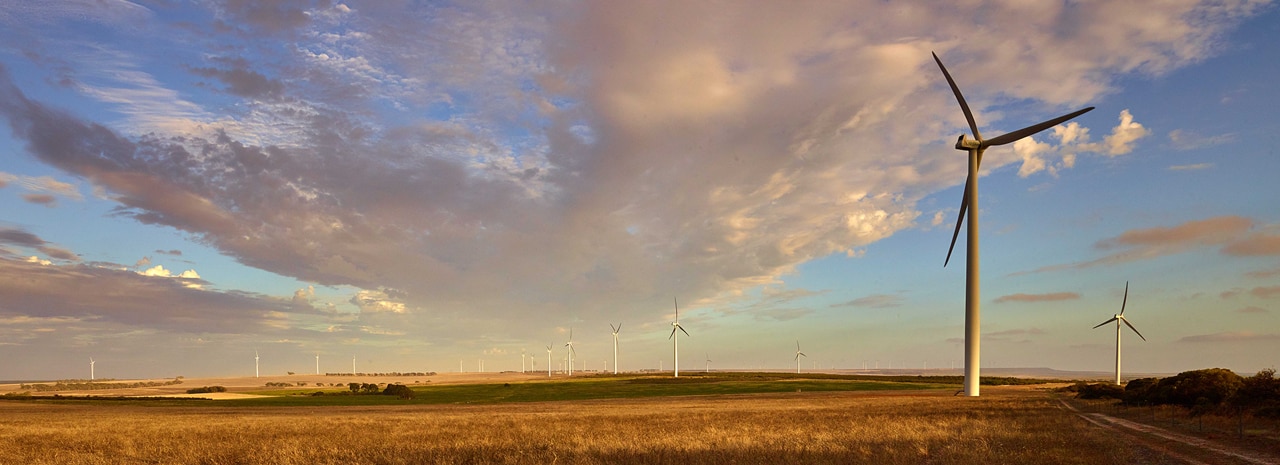
By 2035, the NEM is forecast to need 82 GW of utility-scale solar and wind… that’s four times the current capacity.
By 2050, we need to hit 126 GW.