
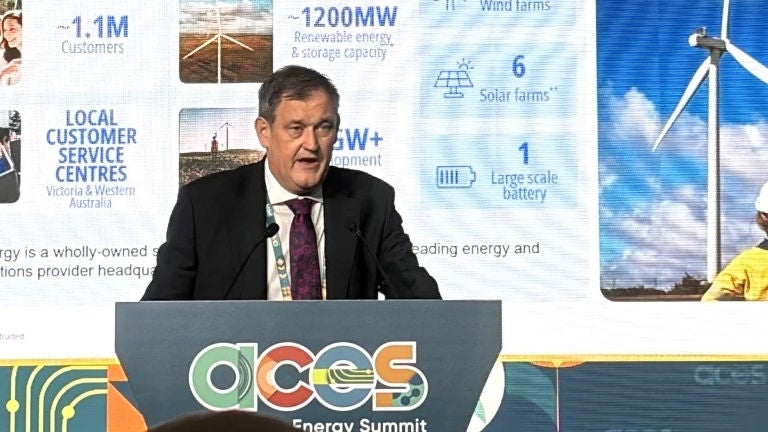
Alinta Energy CEO Jeff Dimery addresses Asia Clean Energy Summit

At the Asia Clean Energy Summit in Singapore, Jeff Dimery shared an Australian perspective on how competition, changing customer expectations and technology are reshaping energy retail. Read his full speech below.

Singapore, 27 October, 2026 — Good afternoon everyone. Thank you to Tata Consultancy Services, NTU and the organisers of Singapore International Energy Week for the invitation.  It's a pleasure to be here in Singapore and to have the opportunity to share some observations from Australia.

When people talk about Australia's energy transition, they typically focus on renewables, batteries, transmission or wholesale markets. But I'd argue one of the most powerful drivers of innovation in our industry has actually been competition.

Competition is what has fundamentally changed the way Australian retailers operate. Competition is what has changed customer expectations. And competition is what has driven many of the technology investments we have made at Alinta over the past decade.

Today, Alinta serves more than 1.1 million customer accounts across Australia through an integrated portfolio spanning retail, trading and generation. And while we're proud of the scale we have built, a significant part of our story is how we’ve adapted to one of the most competitive retail energy markets in the world.

Customers have extensive choice.

One of the interesting differences between Australia and many other markets in our region is the intensity of retail competition.

On the screen behind me you can see that for one postcode in my home state of Victoria, 24 retailers have electricity offers available.

If you dug deeper, you would see that each retailer has multiple offers available. And switching providers is relatively straightforward. It’s actually encouraged by our governments, who manage their own comparison websites – like the one you can see behind me, which is also widely used.

And regulators have placed increasing emphasis on affordability, transparency, customer outcomes and consumer protections. 

It’s why, in our eastern Australian markets, the annual industry churn rate sits around 20 per cent. For a company like Alinta, that means earning the right to serve customers continuously.  Acquiring and not just replacing customers in that environment, which we’re doing, requires an exceptional performance across our business and the entire customer experience.

Alinta Energy CEO Jeff Dimery speaks at the Asia Clean Energy Summit in front of a backdrop showing several images and facts from Alinta Energy.

Every interaction matters. Every bill matters, and every cost that we can control needs to be controlled.  Every service experience matters. And every digital experience matters.

In Australia, the days when an energy retailer could simply send a bill every quarter and expect long-term loyalty are long gone.

What is also unique about Australia is the extent to which customers themselves are becoming participants in the energy system.

Many Australian households no longer just consume electricity. They generate it.

In Queensland, for example, more than half of households now have rooftop solar.

Across the country we're seeing growing adoption of batteries, electric vehicles and other customer energy technologies.

That fundamentally changes the role of the retailer. You're no longer simply selling electricity and gas. You're helping customers navigate a much more complex energy ecosystem.  You're helping them understand how they use energy. You're helping them manage costs. You're helping them optimise technologies such as solar generation, battery storage and vehicle charging.

And increasingly, you're helping them make better decisions based on data. Around a decade ago, we could see where the market was heading. Customer expectations were changing.  Digital engagement was becoming increasingly important. Regulatory requirements were becoming more sophisticated.

And customers were beginning to expect the same experience from their energy retailer that they received from banks, airlines and telecommunications companies.

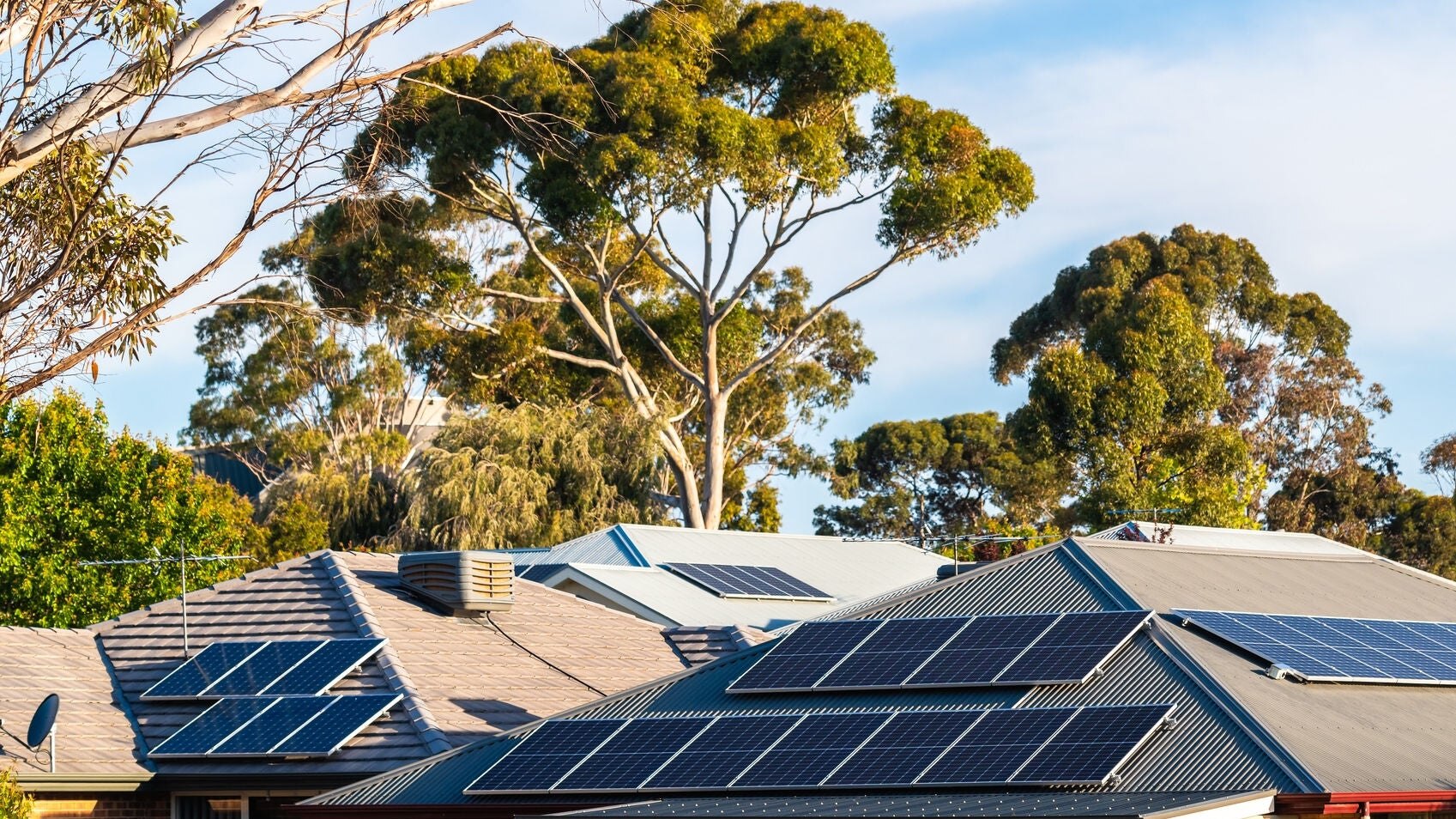
Solar panels on house roofs with trees behind
Solar roof

We saw an opportunity to transform the way we served customers.

That led us to build what became our enCORE platform. At the time, it wasn't an AI project. It wasn't even really a digital transformation project. It was a strategic decision to create a modern, scalable foundation for the future of our retail business. 

It was also driven by the fact that at the time, we couldn’t find an off-the-shelf solution that fully met the needs of our business and the complexity of the energy market. We wanted a platform that would allow us to adapt more quickly, launch products faster, manage compliance more effectively, improve customer experiences and operate more efficiently.

We knew we’d built something special when we started seeing some of the results you can see behind me. 140 product and pricing releases across two years, and a significant improvement in our compliance performance.

What started as a modern retail and billing platform ultimately became the foundation for much of the customer experience we deliver today.

Modern retail technology matters for a number of reasons.

Obviously it improves operational efficiency. Obviously it supports customer experience. But it also plays an increasingly important role in compliance and governance.

In a highly regulated environment, technology helps us improve data quality, improve transparency, improve auditability and respond more effectively to changing regulatory requirements.  That's becoming increasingly important as customer protections evolve and expectations around accountability continue to rise.

Once those foundations were in place, we were able to focus on the customer experience itself.

Today, customers increasingly want control. They want transparency. And they want to engage on their terms. They don't necessarily want to pick up the phone to resolve a simple enquiry. They want immediate access to information. They want self-service.  And they want personalised experiences.

Through our digital channels and mobile app, customers can manage their accounts, pay bills, move home, monitor usage and access energy insights that were simply not available to most consumers a decade ago.

What we're increasingly focused on is helping customers understand not just how much energy they use, but how they use it. When they're using it. Where opportunities to save exist. And how emerging technologies like solar, batteries and EVs fit into the picture.

The encouraging thing is that customers are embracing these tools.

Today, around three quarters of our customer transactions are completed digitally.

Digital sales have increased from around 44 per cent to 56 per cent of total sales activity. More than 40 per cent of customers actively engage through our digital channels over a 90-day period. The old wisdom that energy retailing is a low involvement category doesn’t hold true anymore. And what’s interesting to me is that it’s not just the prosumers that are taking advantage of our technology. 

Although I want to be clear with you that success isn't simply having an app. Success is when customers choose to use it because it genuinely makes their lives easier.

Mika stands in a dry, grassy field wearing a grey jacket with reflective stripes. Behind her, an industrial structure—possibly a conveyor belt or bridge—stretches across the landscape under an overcast sky, with distant hills in the background.

In Australia, the days when an energy retailer could simply send a bill every quarter and expect long-term loyalty are long gone.

The next stage of that journey is artificial intelligence.

But one lesson we've learned is that AI only creates value when the underlying foundations are already in place.

You need modern customer platforms. You need quality data.  You need scalable cloud infrastructure. And you need strong cyber resilience.  Only then can AI move beyond experimentation and begin delivering meaningful business outcomes.

At Alinta, we're already applying AI across areas such as forecasting, customer analytics, software development, operational decision making and workforce productivity.

The goal isn't simply to deploy AI.

The goal is to help our people make better decisions, solve problems more effectively and spend more time focused on customers.

I'd also make one broader observation.

As we look across the Asia-Pacific region, I think we're all confronting a similar challenge. The energy transition is creating greater complexity.  Customers have more options. More information. And higher expectations than ever before.

At the same time, affordability, reliability and security remain critically important. 

Technology can help address those challenges.

But technology alone is not the answer.

The biggest lesson we've learned at Alinta is that technology doesn't replace strategy.

Technology enables strategy.

Our strategy remains what it has always been. To provide customers with better experiences. To help them navigate a changing energy system. And to operate an energy business that is reliable, efficient and competitive.

The companies that will succeed in the next phase of the energy transition won't necessarily be the biggest.

They'll be the organisations that combine trusted customer relationships, operational excellence, partnerships like the one we have with TCS, as well as data, technology and execution capability into a single, integrated model.

That's the journey we have been on at Alinta. And it's one we're excited to continue.

Thank you.